
What Is the Difference Between a Legal and Illegal Brothel?
In many parts of the world, brothels operate under vastly different legal frameworks, depending on local laws and cultural attitudes. Understanding the difference between a legal and illegal brothel is crucial, not only for those involved in the industry but also for clients and communities. This distinction affects safety, health standards, and the rights of workers.
In cities like Vienna, where the regulation of sex work is well-established, the concept of a legal brothel Vienna exemplifies the benefits and challenges of regulated prostitution. This article explores the key differences, focusing on legality, safety, and social implications.

Legal Framework Surrounding Brothels
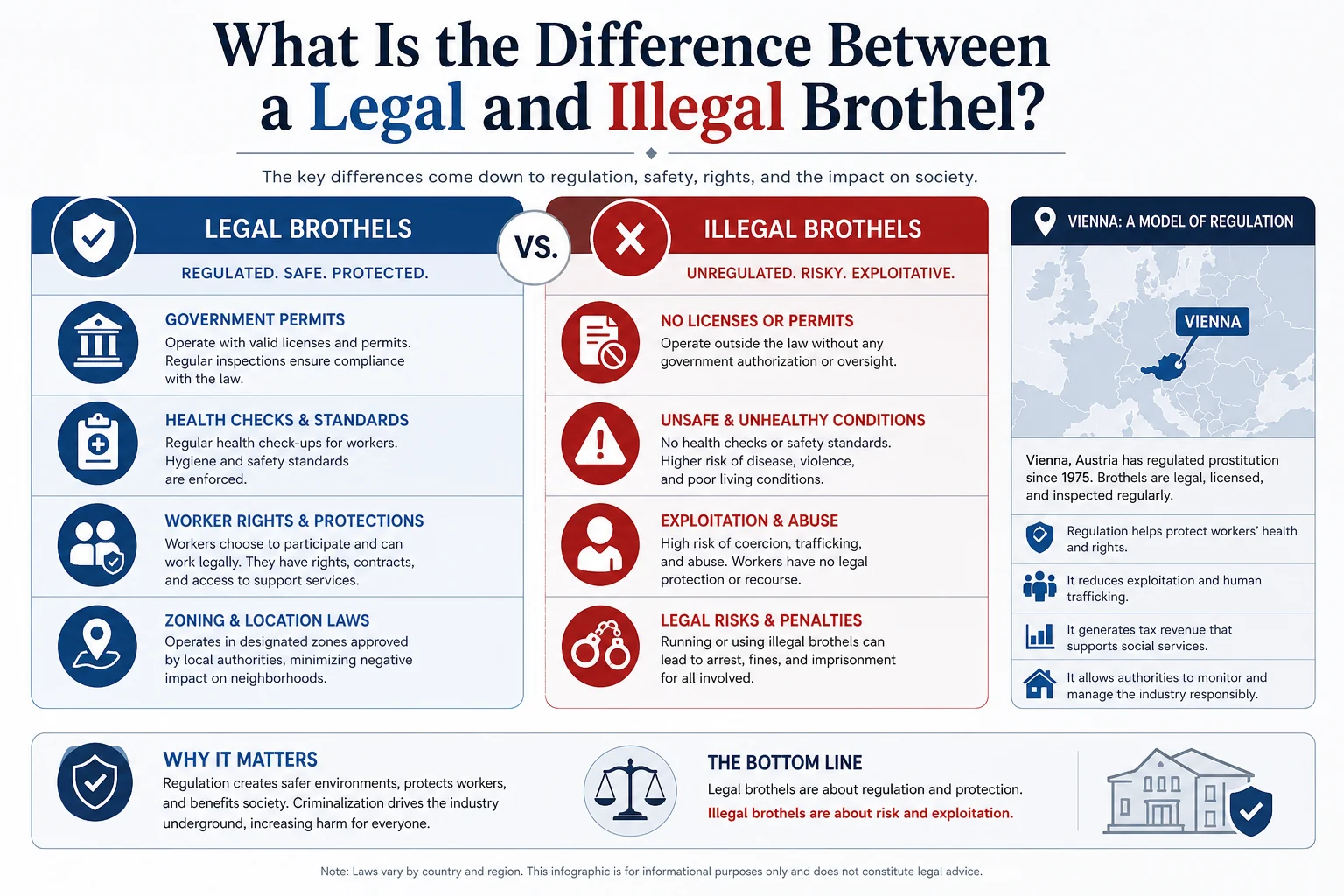
The primary difference between legal and illegal brothels lies in compliance with government regulations. Legal brothels operate with licenses and adhere to strict guidelines instituted by local authorities. These regulations often cover hygiene standards, worker rights, zoning laws, and mandatory health checks.
In Vienna, sex work is legal and regulated. Establishments must obtain permits to operate as legal brothels, ensuring they meet health and safety standards. This system provides a controlled environment where sex workers can work under protection, offering clients a safer experience.
Conversely, illegal brothels operate without permits or oversight. They often function underground, evading regulations, which increases the risk of exploitation and unsafe working conditions. Law enforcement may shut down these operations when discovered, leading to legal consequences for owners and workers alike.
Health and Safety Standards
One of the most significant advantages of a legal brothel, such as those found in Vienna, is the enforcement of health protocols. Legal brothels require regular medical examinations for sex workers to prevent the spread of sexually transmitted infections (STIs). They also maintain sanitary premises to protect both workers and clients.
Illegal brothels typically lack these essential health measures. Without oversight, workers may be unable to access regular health care or report unsafe situations. This can lead to increased health risks and perpetuate cycles of abuse and neglect.
Worker Rights and Protections
Legal brothels in Vienna and other regulated areas often provide sex workers with labor protections similar to other professions. These include fair wages, safe working environments, and the ability to refuse clients. Workers can also access social services and legal support if needed.
Illegal brothels, however, frequently exploit workers. Because these establishments operate outside the law, sex workers lack formal protections and may face coercion or trafficking. They often work in fear of arrest or violence, which undermines their autonomy and well-being.
Impact on the Community
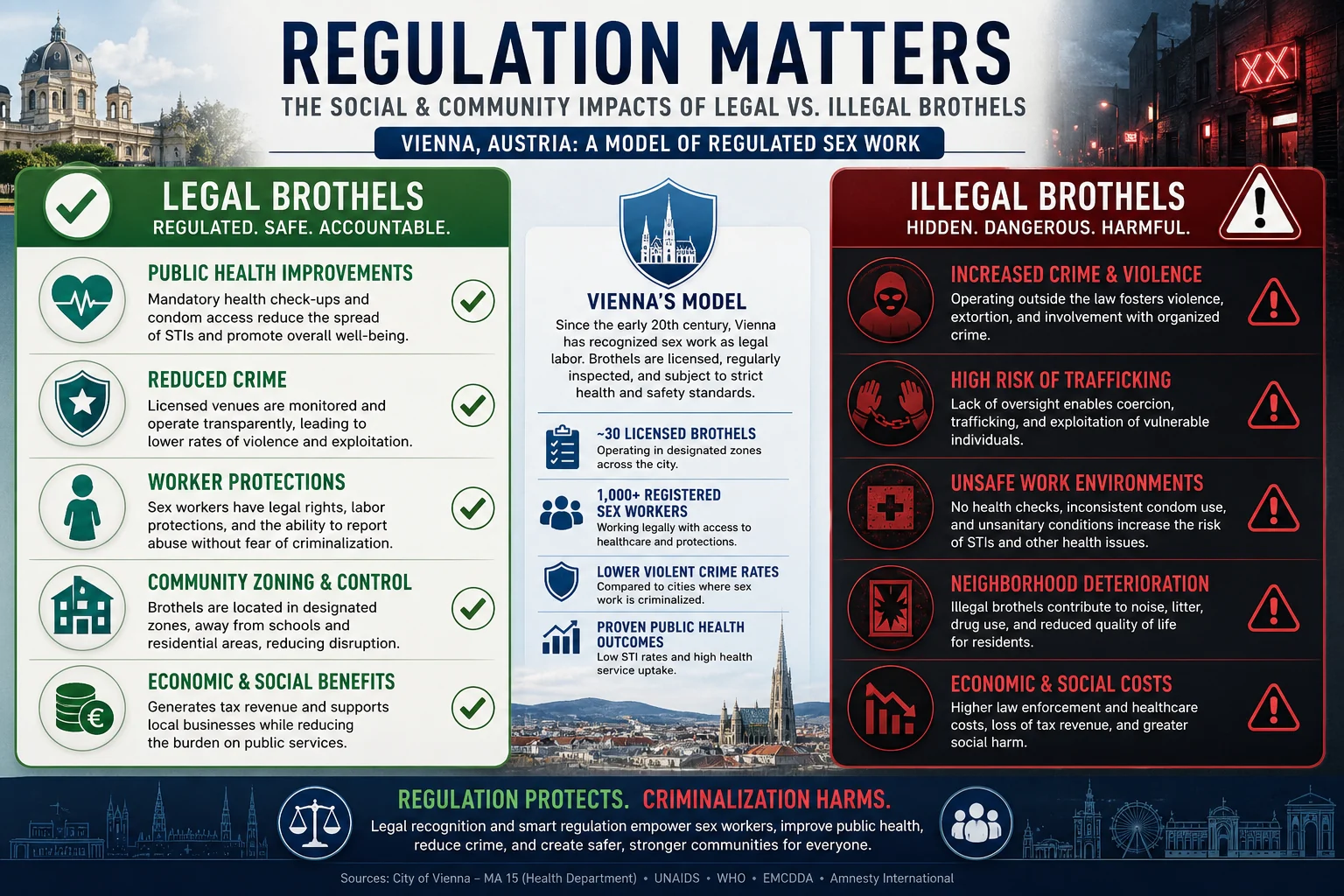
Legal brothels contribute to public health and safety by reducing crime and controlling the spread of diseases. In Vienna, regulated brothels are often located in designated zones, minimizing community disruption and allowing authorities to monitor activities closely.
Illegal brothels can lead to increased criminal activity, including human trafficking, drug abuse, and violence. They may also cause neighborhood deterioration and strain public resources due to the need for frequent law enforcement interventions.
How to Identify a Legal Brothel in Vienna
If you’re looking for a legal brothel Vienna, there are some telltale signs to consider. Legal establishments will display their operating licenses prominently. Their premises will be clean, well-maintained, and located within areas designated by the city’s zoning laws.
Staff at legal brothels will adhere to health and safety protocols, including the use of protection and regular medical checks. Additionally, these brothels often have transparent pricing and policies, providing clients with clear information and a professional environment.
Why Regulation Matters
Regulating brothels benefits everyone involved by fostering transparency and accountability. For sex workers, it means safer working conditions and legal recognition. For clients, it ensures safer experiences and reduces the risk of engaging with exploitative or dangerous operations.
For society at large, legal brothels contribute to public health, reduce illegal activity, and provide a framework for addressing issues such as trafficking. Vienna’s approach to legal brothels exemplifies how thoughtful regulation can balance individual freedom with community welfare.
Conclusion
The difference between legal and illegal brothels is more than just a matter of paperwork; it represents a fundamental divide in safety, rights, and social impact. Legal brothels like those in Vienna operate within a structured system that protects workers, clients, and communities. Illegal brothels, on the other hand, exist in the shadows, often fostering danger and exploitation.
Understanding these differences is essential for informed decisions, whether you are a client, a worker, or a policymaker. By supporting regulated, legal brothels, societies can promote safer environments and improve the lives of those involved in this complex industry.


You May Also Like

How to Become an Escort Model in Austria
A Brief Story About Prostitution in Austria