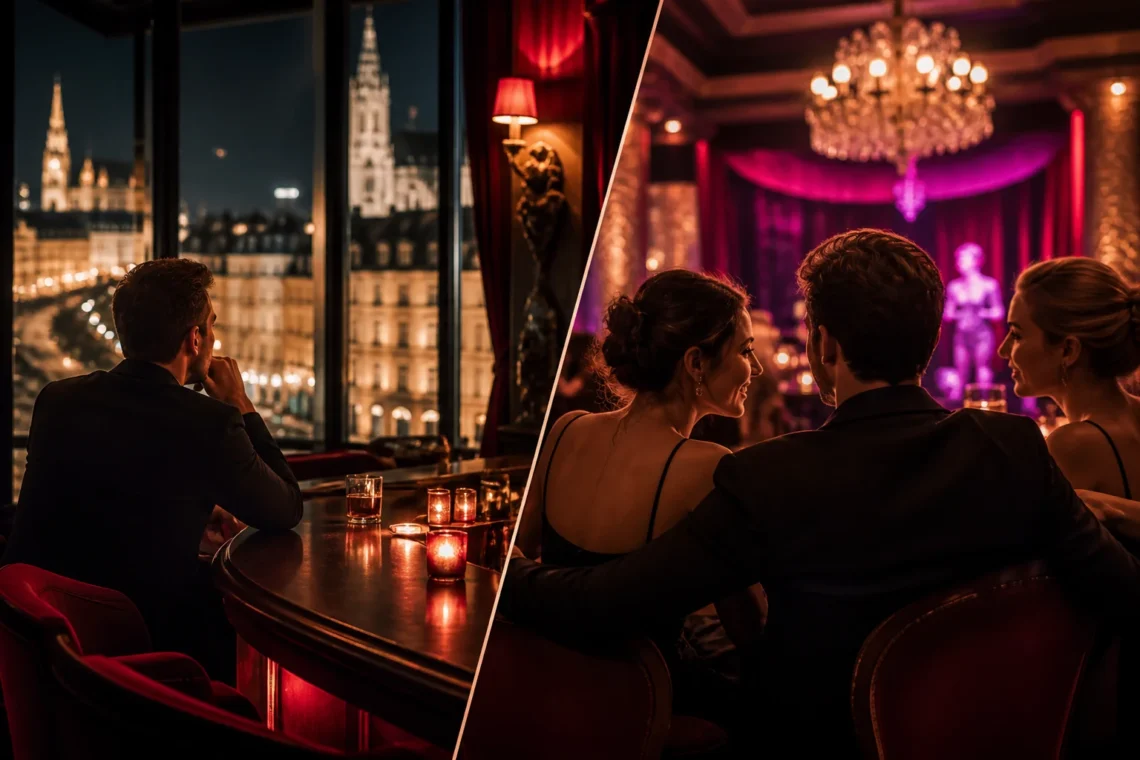
Solo or in a Group: How the Evening Changes in a Vienna Sex Bar
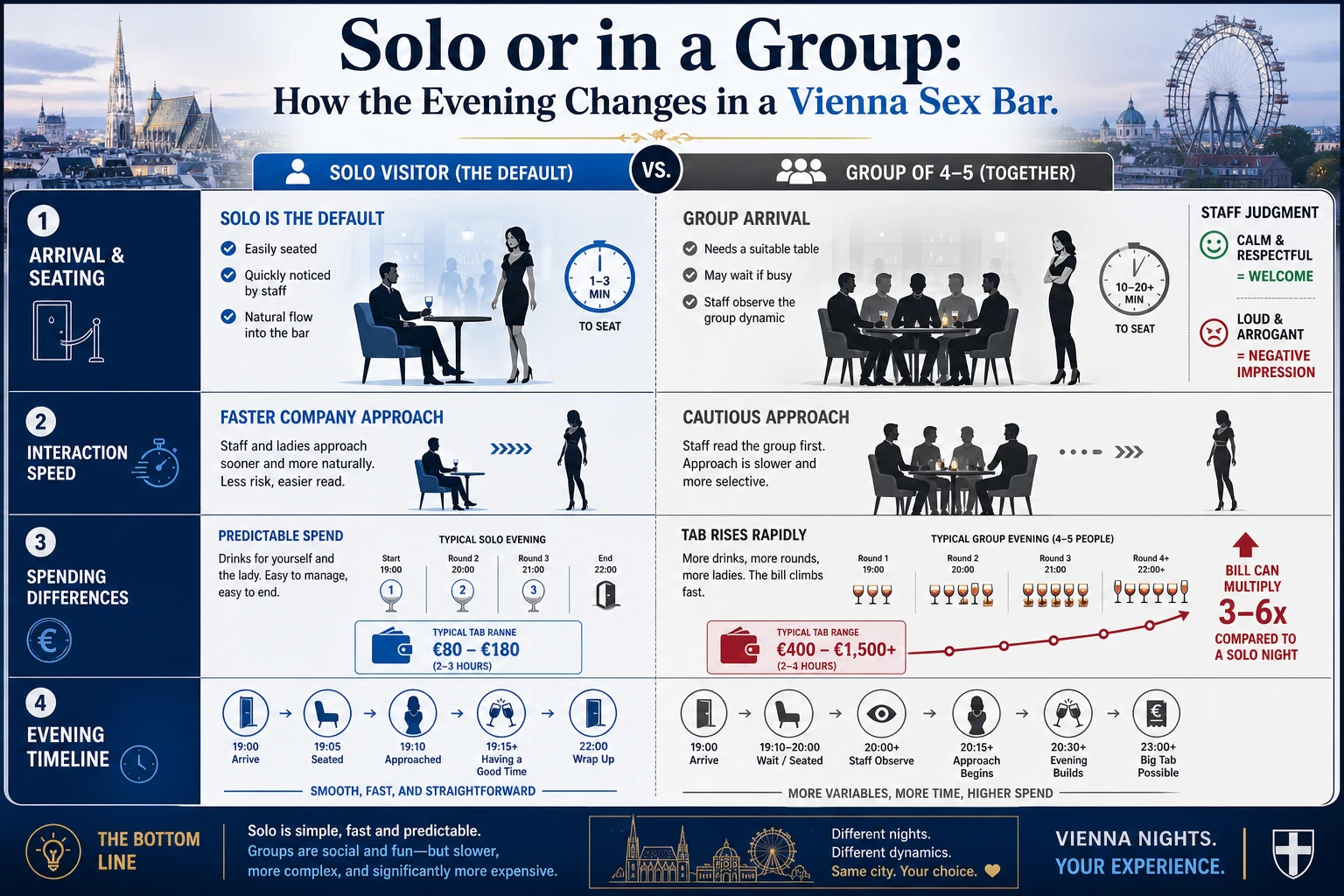
Two men walk into the same Vienna sex bar on the same night, ten minutes apart. One is alone, one arrives with four friends. They order from the same menu, pay the same prices and sit in the same room, and they will have almost nothing in common by the end of the evening.
Group size is the most underrated variable in this whole scene. It changes how staff read you, how quickly company approaches, how much you spend, and how the night is likely to end.

Alone is the default, not the exception
First-time visitors often assume arriving alone looks odd. In practice it is the most common way to come, and the houses are built around it. A solo guest is easy to seat, easy to serve and easy to approach, which is precisely why the room works faster when you are on your own. Company appears sooner, conversations start with less friction, and nobody is waiting for you to check with anyone.
There is also a quieter advantage. Alone, you set your own pace and leave when you want, and the reasons people give for coming at all tend to be more honest, which is roughly the point made in the five reasons to visit a sex bar in Vienna. The solo evening is the one you actually chose. The group evening is negotiated.
What a group changes in the first five minutes
A group of four or five reads differently from the door onwards. Seating takes longer, the table needs to be bigger, and the staff make an assessment they will not say out loud: is this a calm group or a loud one. That judgement affects the service for the rest of the night. Groups that keep their volume reasonable get the same warmth a solo guest gets. Groups that arrive already shouting get correct, efficient, slightly distant treatment.
Company also approaches groups more cautiously, and for an obvious reason: a table of five can turn into an audience, and nobody enjoys being a performance. The behaviours that cost a group the room are entirely predictable, and they are listed plainly in the behaviours to avoid in a sex bar. Almost all of them are easier to commit with friends watching.
The money looks different too
In a group the round becomes a unit. Somebody orders for the table, somebody else orders the next one, and the count rises much faster than anyone tracks. This is not a trap set by the house, it is simple arithmetic that everyone forgets in a dark room. If the group intends to stay at bar level, the useful move is agreeing at the start who pays for what, because retroactive fairness at closing time is the least pleasant conversation of the night.
Solo visitors have the opposite problem and the easier one: every drink is a decision they made themselves, so the total is predictable. If the budget is the main constraint of the evening, the solo format wins outright, and the usual tactics for keeping an evening affordable are far easier to apply when nobody is buying rounds on your behalf.
Couples are a third category
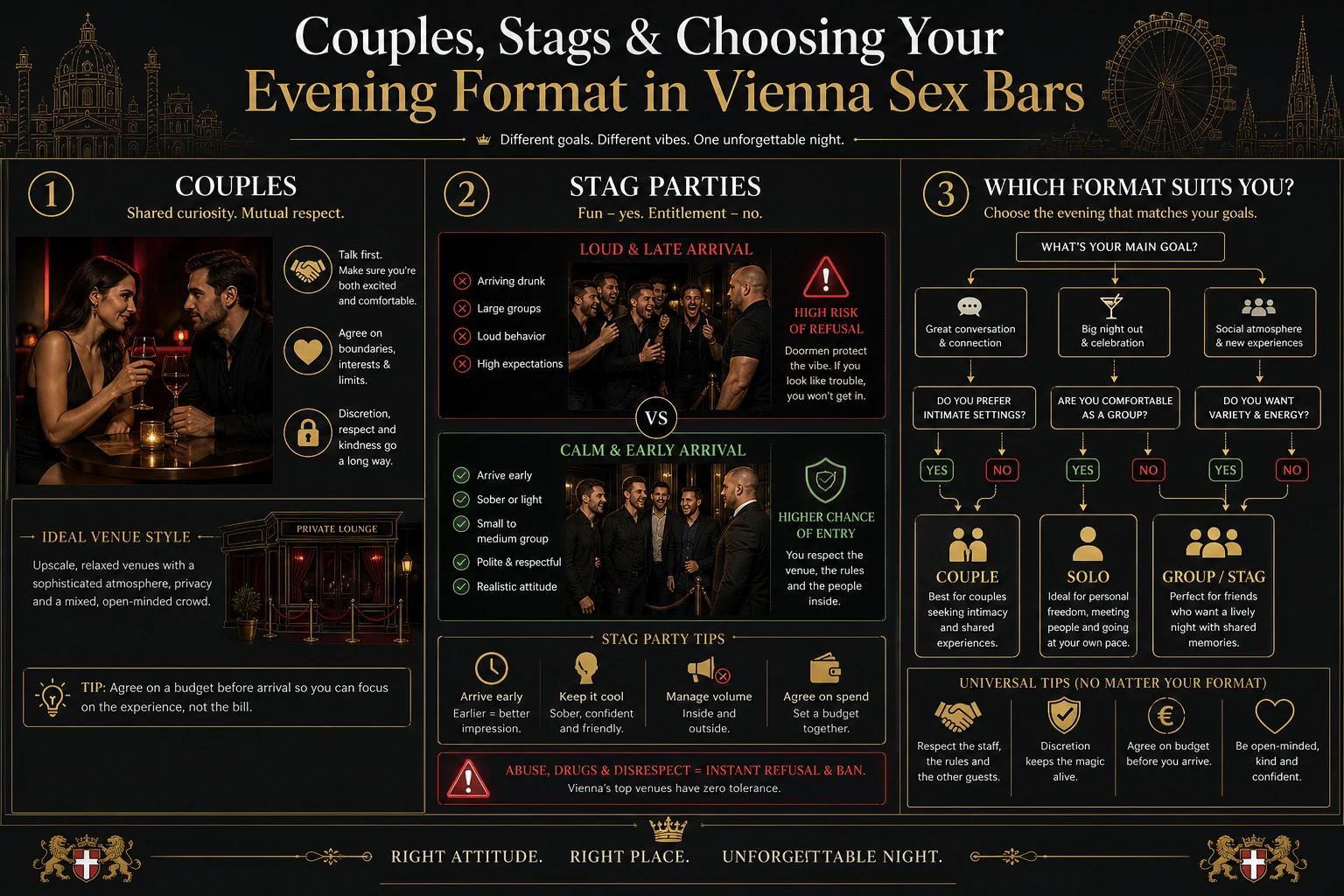
A couple is neither a solo guest nor a group, and the houses treat them as their own case. Smaller bars are usually the better fit, because the room is quieter and the attention is less directed; the practical details are covered in whether couples can visit smaller sex bars in Vienna. What matters most is that both people actually want to be there, and that the two of them agreed beforehand what the evening is and is not.
The couples who enjoy these rooms tend to treat them as a shared curiosity rather than a test, which is the theme of how couples use sex bars to reconnect quietly rather than wildly. Women arriving without a partner are a separate question again, and the neighbouring guides address it directly in can women visit a Vienna sex club alone.
Stag parties and the honest warning
Stag groups are welcome in principle and difficult in practice, and every doorman in the city knows the pattern. The group arrives having already drunk elsewhere, the volume is set before the first order, and one member is being managed by the other five. Houses accept such groups when they look controllable and turn them away when they do not, and the refusal happens at the door with no discussion.
If you are organising one, the fix is unfashionable but effective: come earlier and soberer than the tradition demands. A group that walks in at ten with clear eyes gets a good table and good service. The same group at one in the morning gets the reasons listed in five reasons you might be denied entry, read back to them on the pavement.
Which format suits which visitor
If the goal is conversation and an unhurried evening, go alone or in a pair. If the goal is a night out with friends where the venue is the backdrop rather than the point, a small group works, and smaller rooms handle it better than big ones; the atmosphere argument is spelled out in why smaller sex bars sometimes beat the big clubs. Groups of more than five are a different proposition entirely and are best split across two tables, which most houses will suggest anyway.
The one combination that rarely works is a large group with one member who wanted a solo evening. He will spend the night half-present, and nobody involved enjoys it.
The short version
Arriving alone is normal, fast and cheap to control. It gets you approached sooner, keeps your spending predictable, and lets you leave at a time nobody else votes on. A group changes the physics of the room: slower seating, a staff judgement made at the door, more cautious company and a drinks count that climbs without anyone deciding it should. Couples are a third case, best served by smaller houses and by a conversation held before arrival rather than during it.
Pick the format that matches what you actually want from the evening, keep group volume low, agree the money at the start, and remember that every rule about behaviour is harder to follow with an audience of friends. That is the whole difference, and it is decided before the first drink.


You May Also Like

Germany’s New Prostiution Laws – Everything That Changed in One Year

One of Vienna’s Most Famous Sex Bar Got Its Second Sex Doll