
Safest Countries in Europe for Legal Prostitution
Prostitution has been a part of human society for centuries, and its legal status varies greatly across Europe. For those involved in the sex work industry or simply interested in understanding where it is safest to engage in legal prostitution, it’s important to explore which countries offer the best protections, regulations, and overall safety measures. This article delves into the safest countries for prostitution in Europe, highlighting the legal frameworks, health provisions, and social attitudes that contribute to a secure environment for sex workers.

Understanding Legal Prostitution in Europe
Europe presents a diverse landscape when it comes to prostitution laws. Some countries have fully legalized and regulated prostitution, while others allow it under specific conditions or criminalize aspects of the trade entirely. The safety of sex workers often correlates with the clarity of legal status, access to healthcare, and enforcement of rights. Countries that focus on harm reduction, provide health services, and enforce labor protections tend to be safer for those in the industry.
When searching for the safest countries for prostitution, several key factors come into play: legal recognition of sex work, regulation that ensures safe working conditions, access to medical care, protection from exploitation and trafficking, and social acceptance that reduces stigma. Let’s explore some European countries that stand out in these areas.
Germany: A Model of Regulation and Safety
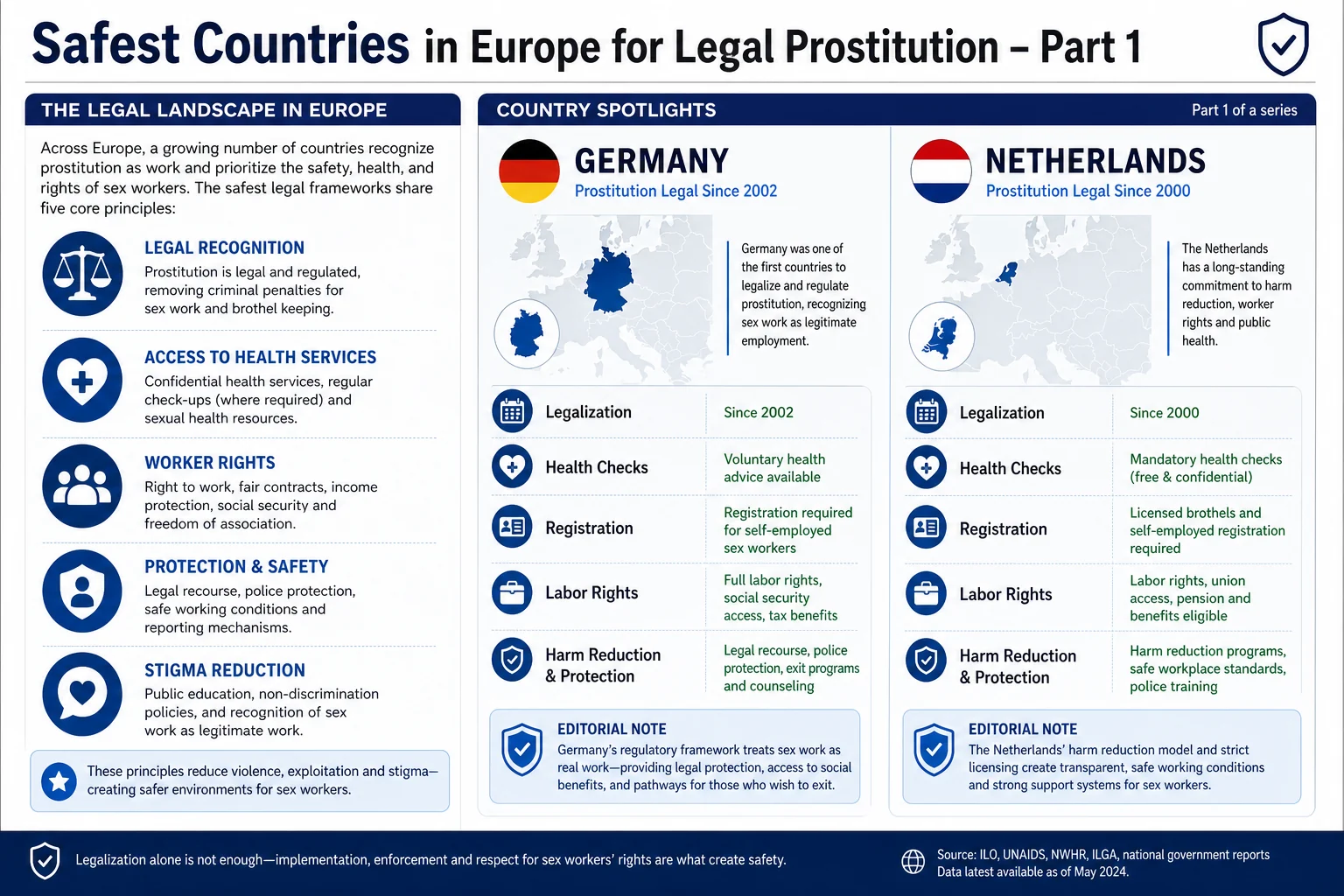
Germany is widely recognized as one of the safest countries for prostitution in Europe due to its comprehensive legal framework. Prostitution was fully legalized in 2002, allowing sex workers to register, pay taxes, and access social benefits. The law mandates regular health checks and provides a clear structure for brothel operations, which helps maintain sanitary and safe working environments.
Sex workers in Germany enjoy labor rights similar to those in other industries, including contracts and protections against exploitation. The government also invests in campaigns to reduce stigma and promote public health. While challenges remain, such as illegal prostitution and trafficking, the overall environment for legal sex work is considered progressive and protective.
Netherlands: Safe and Supervised Prostitution Zones
The Netherlands is another prominent example of a country that prioritizes safety in prostitution through legalization and regulation. Amsterdam’s famous Red Light District operates under strict municipal oversight, with sex workers required to register and undergo health screenings. Licensed brothels and sex clubs are inspected regularly to ensure compliance with safety standards.
The Dutch system emphasizes harm reduction and worker autonomy, allowing sex workers to work independently or within cooperatives. Law enforcement focuses on combating trafficking and exploitation rather than penalizing consensual sex work. This approach creates a safer, more transparent environment, making the Netherlands a preferred location for legal prostitution.
Switzerland: Health-Oriented and Protective Legal Framework
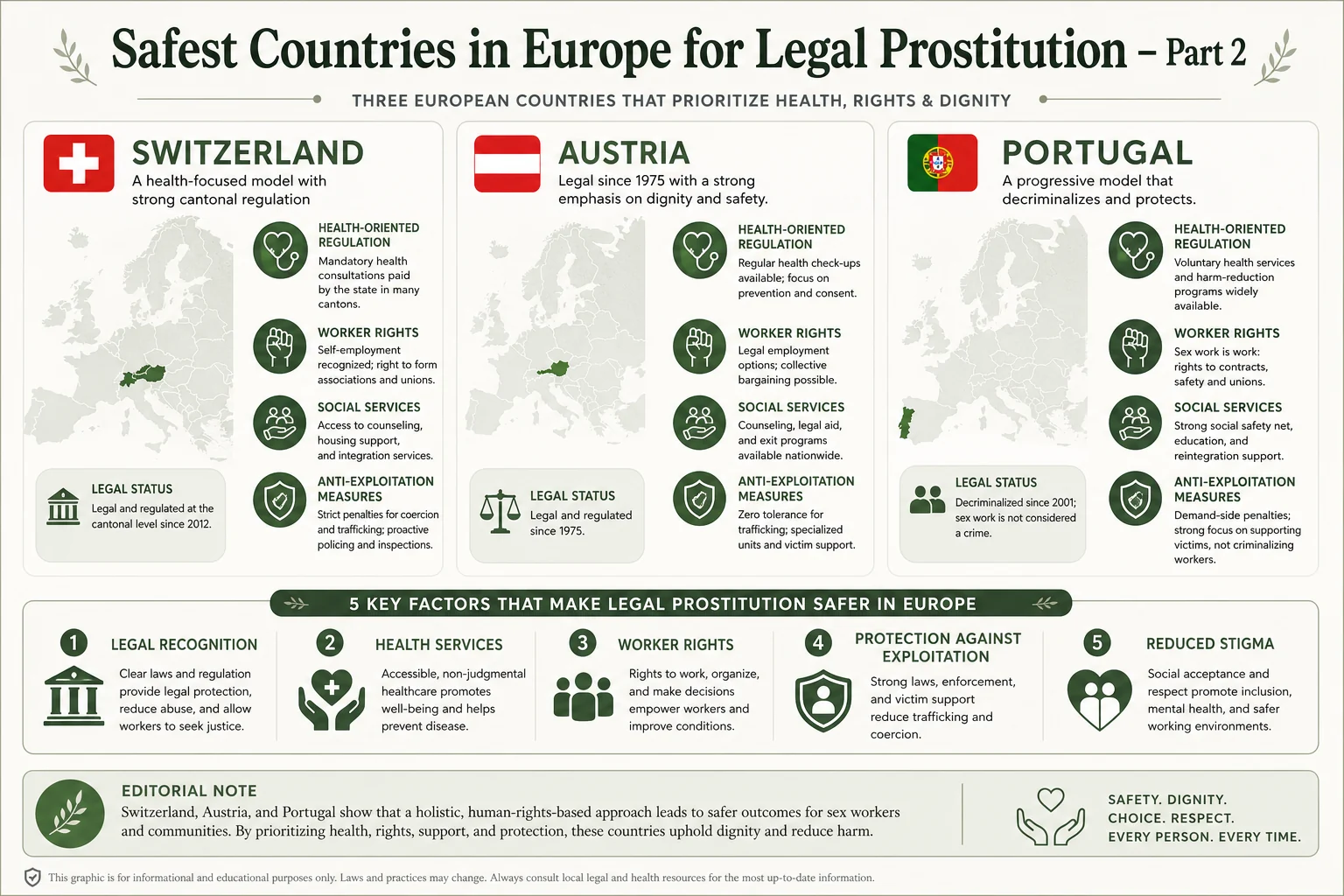
Switzerland’s approach to prostitution is grounded in public health and safety. Prostitution is legal and regulated, with cantonal authorities responsible for implementing specific rules. Sex workers must register and participate in regular health checks, which helps control the spread of sexually transmitted infections (STIs).
The Swiss system also provides social services and legal support to sex workers, ensuring they are protected from abuse and exploitation. Brothels operate under licenses and are subject to inspections. With its focus on health, rights, and regulation, Switzerland offers a safe environment for legal prostitution.
Austria: Balancing Regulation and Rights
Austria has a regulated system that allows legal prostitution with an emphasis on protecting workers’ rights. Prostitution is legal, but it must be registered with local authorities, and sex workers are entitled to social security benefits. Regular health checks are mandated, and brothels must comply with strict hygiene and safety standards.
The Austrian government works closely with NGOs to ensure sex workers have access to support services, including counseling and legal aid. This combination of regulation, health focus, and social support contributes to Austria’s reputation as a safe country for prostitution.
Portugal: Progressive Policies with Protective Measures
Portugal has taken a unique approach to prostitution by decriminalizing the act of selling sex while maintaining laws against exploitation and trafficking. This nuanced system allows sex workers to operate more openly without fear of prosecution, which enhances their safety.
The country also offers health services tailored to sex workers, including free STI testing and counseling. Police efforts concentrate on protecting sex workers from violence and trafficking, rather than criminalizing consensual prostitution. These policies contribute to a safer environment, although full legalization and regulation are still under discussion.
Key Factors That Make These Countries Safe
Across the safest countries for prostitution in Europe, several common themes emerge:
- Legal Recognition: Clear laws that define and regulate prostitution reduce ambiguity and protect sex workers from arbitrary prosecution.
- Health Services: Regular access to medical check-ups, free or affordable STI testing, and sexual health education are crucial for safety.
- Worker Rights: Labor protections, social benefits, and the ability to work legally contribute to dignity and security.
- Protection Against Exploitation: Strong law enforcement targeting trafficking and abuse help create a safer working environment.
- Reduced Stigma: Social acceptance and public education programs diminish discrimination, enabling sex workers to seek help when needed.
Conclusion: Prioritizing Safety in Legal Prostitution
Finding the safest countries for prostitution involves more than just legal status; it requires a holistic approach that combines regulation, health care, rights protection, and social support. Germany, the Netherlands, Switzerland, Austria, and Portugal exemplify how thoughtful policies can create safer environments for sex workers. These countries show that when prostitution is treated as a legitimate form of labor rather than a crime, the risks associated with the profession can be significantly reduced.
For sex workers and those interested in the industry, understanding these legal frameworks and safety measures is essential. Choosing a country with comprehensive protections not only benefits individual workers but also promotes public health and human rights on a broader scale.


You May Also Like

Why Smaller Sex Bars Sometimes Have a Better Atmosphere Than Big Sex Clubs

Common Mistakes at Sex Clubs
