
How Does Austria Protect Sex Workers?
Sex worker rights in Austria are a crucial aspect of the country’s approach to labor, health, and human rights. Austria has established a legal framework that aims to balance protection, regulation, and public health concerns, all while striving to respect the dignity and safety of sex workers. This article explores how Austria protects sex workers, the legal environment surrounding sex work, and the social measures in place to support this community.

Legal Status of Sex Work in Austria
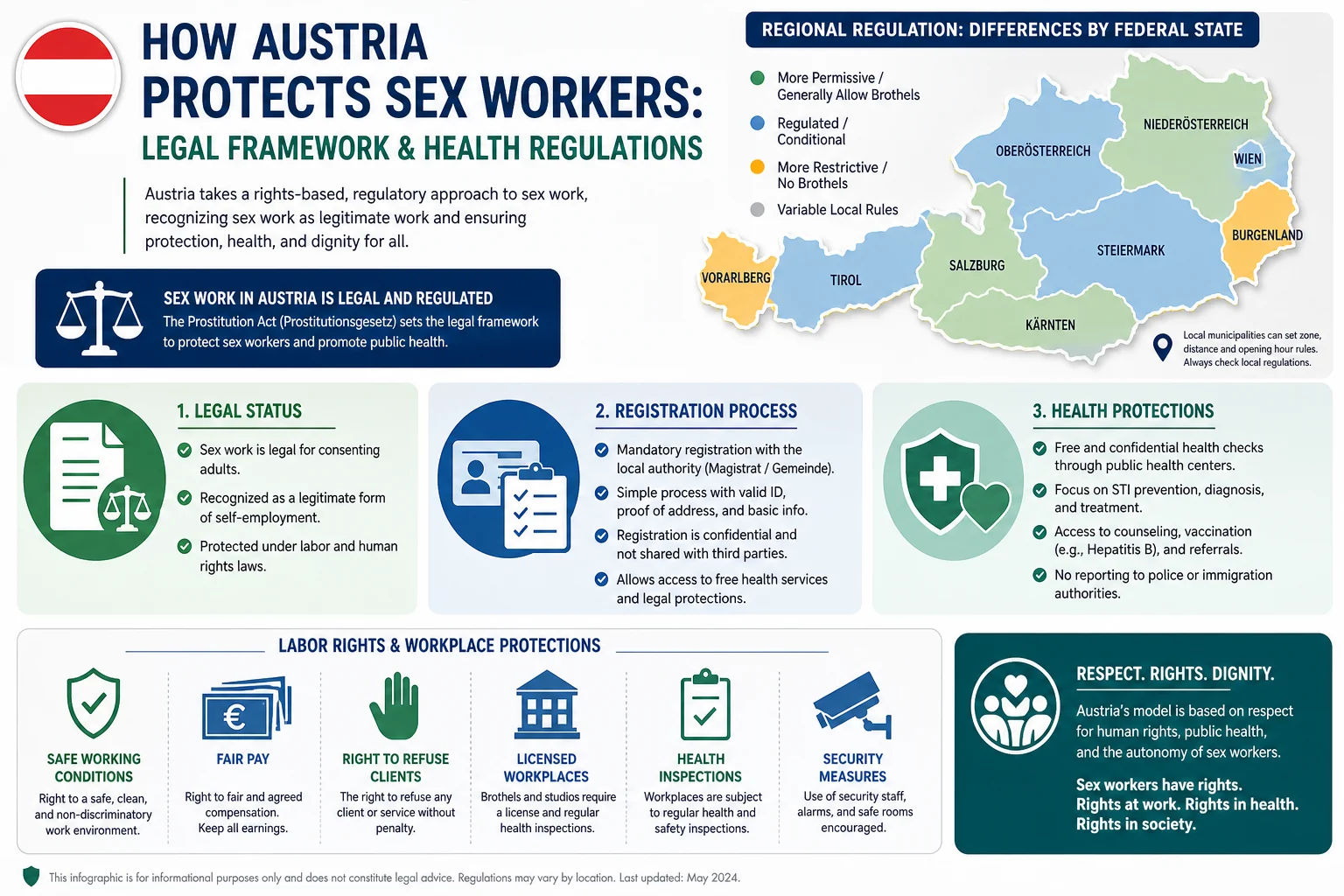
Sex work in Austria is legal and regulated. The country recognizes prostitution as a form of work, which sets it apart from many other nations where it remains criminalized or operates in a legal grey area. However, this legality comes with specific regulations that vary between the federal states, reflecting Austria’s decentralized governance.
The core principle behind the regulation is to ensure that sex work is conducted in safe, controlled environments. Sex workers must register with local authorities, and workplaces like brothels and clubs are subject to licensing and health inspections. This legal framework aims to provide sex workers with a degree of protection while allowing the state to monitor and reduce potential abuses.
Registration and Health Regulations
One of the key protections for sex workers in Austria is the mandatory registration system. Registered sex workers gain access to regular health checks, which focus on preventing the transmission of sexually transmitted infections (STIs). These health checks are confidential and free, encouraging compliance and promoting public health.
Sex workers must register with municipal authorities and obtain a license to work legally. This process involves verifying age, identity, and health status. While some critics argue that registration can lead to stigmatization or privacy concerns, supporters highlight that it opens doors to social services and legal protections.
Labor Rights and Workplace Safety
Austria treats sex work as a legitimate occupation, which means sex workers have certain labor rights. They are entitled to safe working conditions, fair pay, and the right to refuse clients without penalty. Employers in the sex industry must adhere to workplace safety standards, including measures to prevent violence and exploitation.
Workplaces must provide secure environments, with some venues employing security personnel and surveillance to deter abuse. Additionally, sex workers have the right to organize and form associations, which can advocate on their behalf and contribute to policy discussions.
Protection from Exploitation and Trafficking
While sex work is legal, Austria maintains a strict stance against human trafficking and exploitation. Authorities actively investigate and prosecute cases where individuals are coerced, forced, or manipulated into sex work. This distinction is essential to protect vulnerable populations while respecting the autonomy of consenting adult sex workers.
Victims of trafficking receive support through specialized services, including legal aid, counseling, and safe housing. Collaboration between law enforcement, social services, and non-governmental organizations ensures a comprehensive approach to combating trafficking and exploitation within the sex industry.
Social Support and Advocacy
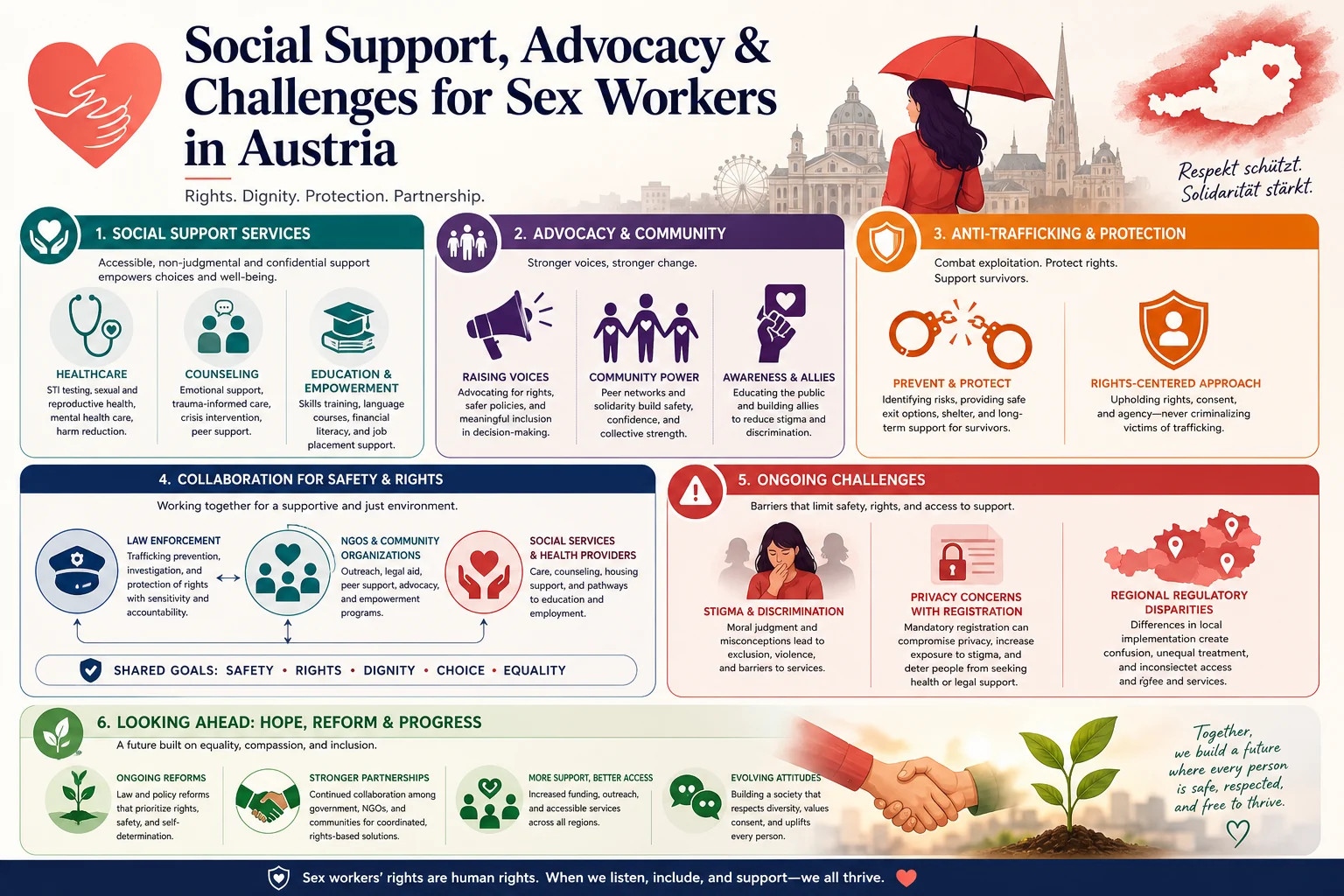
Beyond legal protections, Austria offers social services tailored to the needs of sex workers. These include access to healthcare, psychological support, and educational programs focused on rights awareness and safe work practices. Some organizations provide outreach programs that build trust and offer resources directly in sex work environments.
Advocacy groups play a vital role in improving sex worker rights Austria-wide. They engage with policymakers to highlight issues such as stigma, discrimination, and gaps in protection. These groups also work to empower sex workers by facilitating community-building and providing platforms for their voices.
Challenges and Ongoing Debates
Despite strong protections, challenges remain. Stigma and social discrimination against sex workers persist in many parts of Austrian society, sometimes affecting access to services and legal recourse. Privacy concerns related to mandatory registration continue to spark debate among human rights advocates.
Moreover, variations in regulations between federal states can create inconsistencies in the experience of sex workers across Austria. Some regions have stricter rules or limited access to health and social services, highlighting the need for continued dialogue and reform to ensure uniform protection.
The Future of Sex Worker Rights in Austria
Austria’s approach to sex worker rights reflects a commitment to human rights, public health, and labor protections. Moving forward, ongoing efforts focus on enhancing the legal framework, reducing stigma, and expanding social support. Increased collaboration between government agencies, advocacy groups, and sex workers themselves is key to creating an environment where sex work is safe, dignified, and free from exploitation.
As public awareness grows and societal attitudes evolve, Austria is poised to continue leading by example in protecting the rights and well-being of sex workers, ensuring that their voices are heard and respected within the broader human rights landscape.


You May Also Like
Sex Work Disclosure in Austria – Refugees Also Involved?

What Is the Difference Between a Legal and Illegal Brothel?