Sitting at the Bar or at a Table: Which Spot Suits Which Visitor
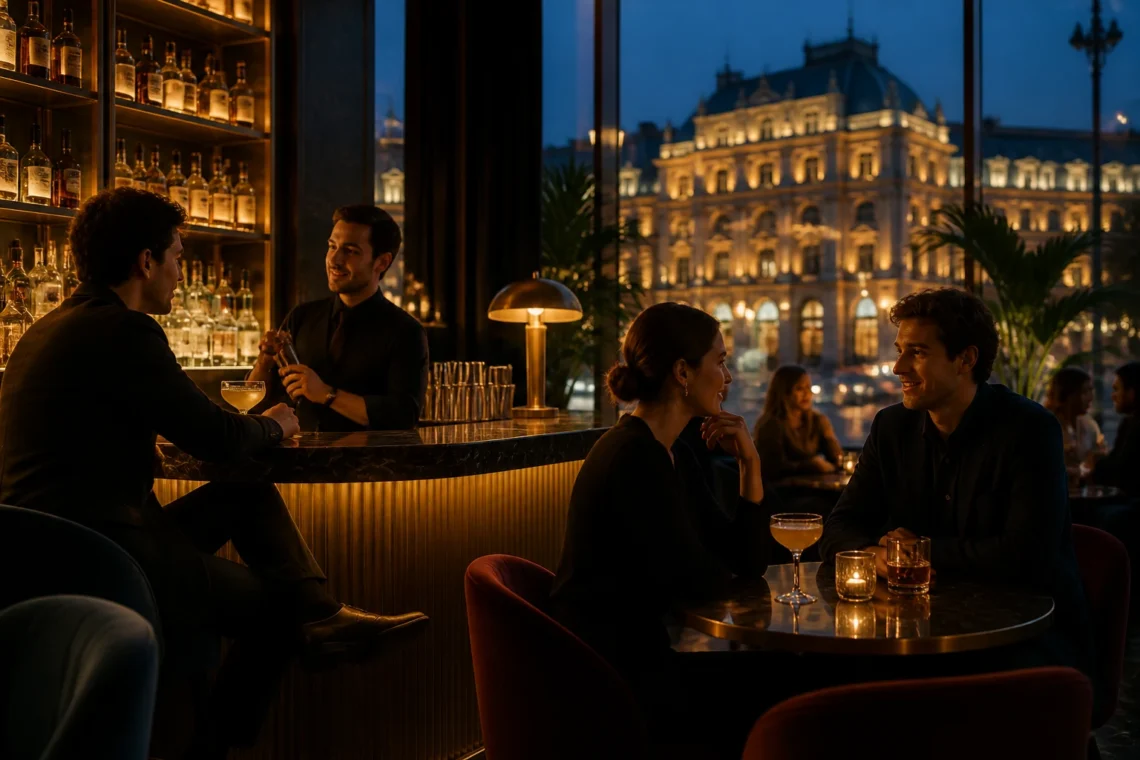
The choice takes two seconds and shapes the entire evening. You walk into a Vienna sex bar, the room is half full, and you decide: a stool at the counter, or a seat at one of the tables along the wall. Most visitors pick on instinct and never think about it again. The regulars pick deliberately, because the two positions produce genuinely different nights, and neither is better than the other in the abstract.
The bar is the fast lane
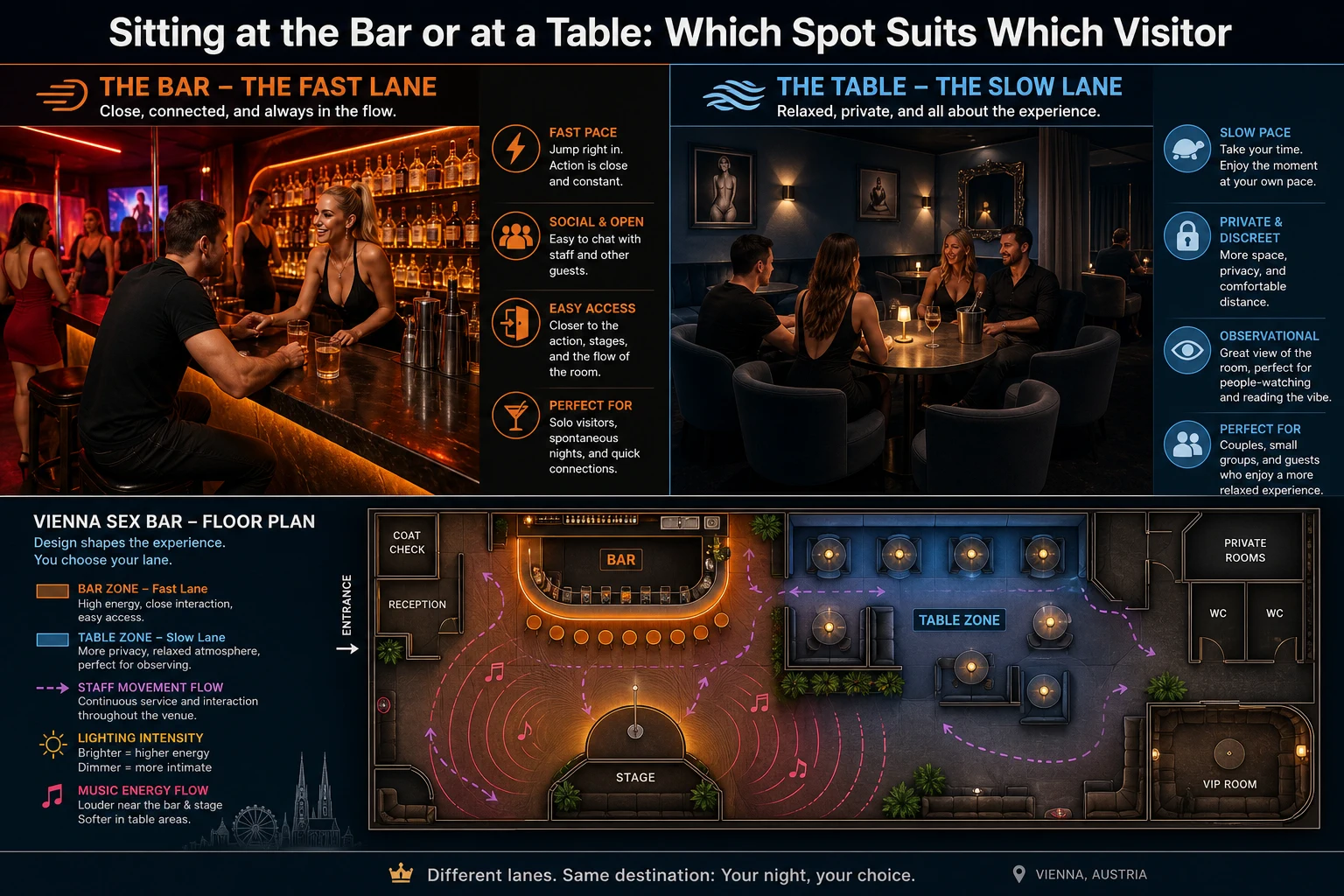
Sitting at the counter puts you inside the traffic of the room. The bartender is a metre away, anyone crossing to order passes behind you, and the seat beside you is available to whoever wants it. Conversations start here with no effort at all, because proximity does the work that confidence would otherwise have to do.
It is the natural choice for a solo visitor, and particularly for a first one. You get a clear view of how the place works, you can ask the staff anything, and you are never stranded alone at a table wondering whether to look at your phone. For visitors who came mainly for company and atmosphere rather than for a plan, this is almost always the right seat, and it fits most of the motivations listed in why people visit these venues at all.
The table is the slow lane
A table buys distance. You see the room rather than sit in it, conversations happen because someone chose to come over, and the pace is entirely yours. For visitors who want to watch for twenty minutes before engaging, that distance is worth more than the missed small talk at the counter.
It is also the better seat for anything private: a longer conversation, a couple, or a guest who would simply rather not be part of the general traffic. The trade-off is real though. A table says available but not urgent, and in a busy room that can mean nobody comes over for a while. Posture and orientation matter more here than anywhere else in the venue, which is exactly what the guide on body language inside these rooms is about.
What the room itself is doing to your choice
Venues are designed, not arranged by accident. Lighting is brighter at the counter and softer at the tables, the music usually carries differently across the two zones, and the seating heights are chosen to make some interactions easy and others deliberate. If that sounds excessive, it is the everyday craft described in how lighting and music shape the mood, and once you notice it you cannot stop noticing it.
Room size changes the calculation too. In a large house the bar and the tables are effectively separate worlds and the choice is significant. In a small one everything is within earshot and the decision barely matters, which is part of the appeal argued in why a sex bar can beat a small studio: the format gives you somewhere to sit and think without being committed to anything.
Language is a practical factor
If your German is limited, the counter is the friendlier seat. Staff in Vienna’s larger venues switch to English without effort, they are used to it, and being close to them removes the main anxiety of a first visit: not knowing what is happening. At a table you are further from the person who can explain things.
This question comes up constantly among visitors, and the honest answer is that English is enough in most houses, as set out in whether English alone is enough for a Vienna sex bar. The bigger and more international the house, the truer that is; a larger high class venue will have staff handling several languages on any given night, while a small neighbourhood bar may not.
Switching seats mid-evening
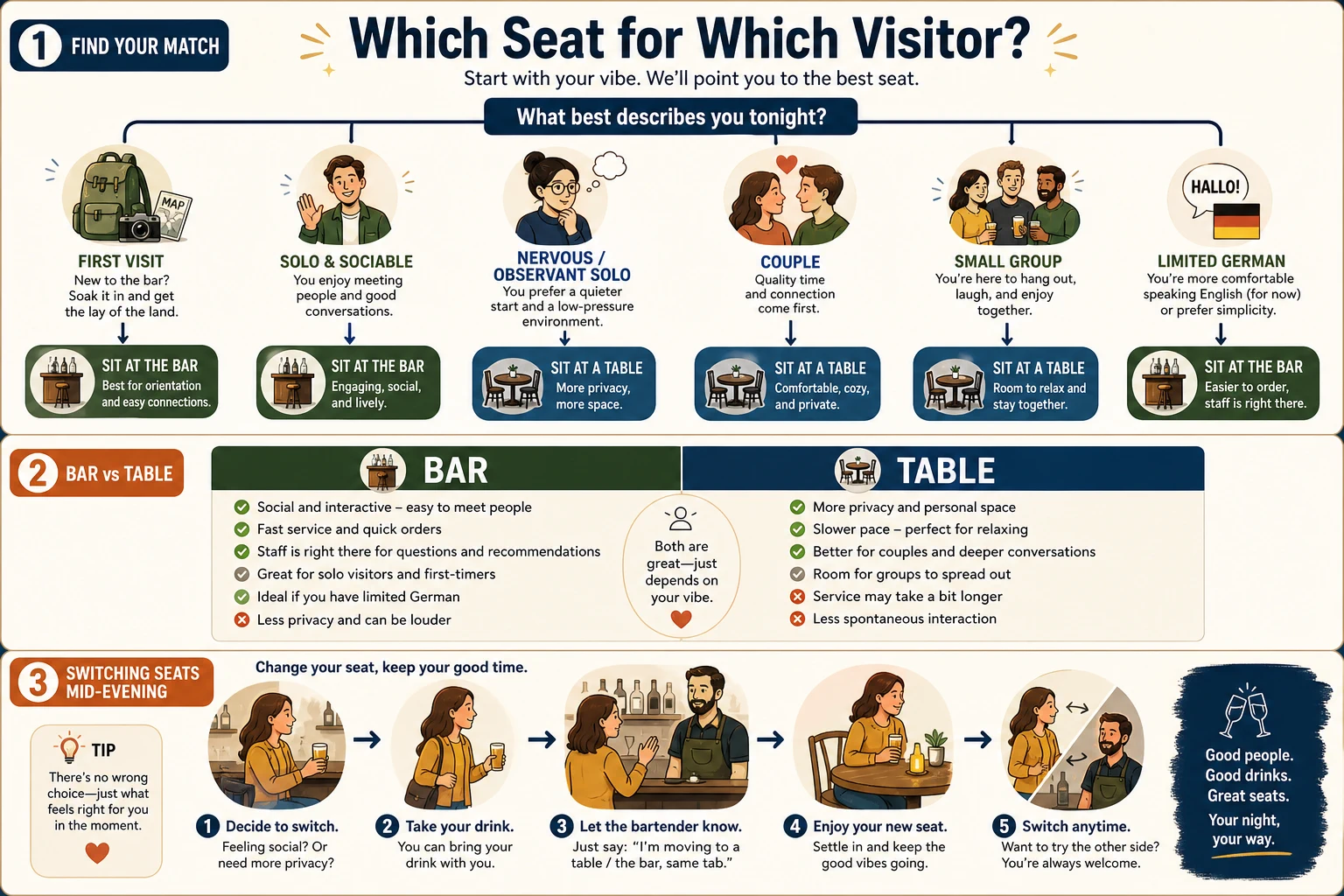
Nobody minds, and it is more useful than it sounds. A common and effective pattern is to start at the bar for the first drink, get oriented, talk to the bartender, then move to a table once a conversation is underway and you want somewhere quieter to continue it. The reverse works too: a slow table start followed by a move to the counter when the room fills up.
The only etiquette is to take your glass with you and to tell the bartender if your tab is tied to a seat. In houses where the counter is crowded, leaving a stool unattended for twenty minutes will also, reasonably, cost you the stool. The guidance in how to behave around the people working the room applies across all of these venues, whatever the format.
Which seat for which visitor
First visit: the bar, without hesitation. Solo and sociable: the bar. Solo and observant, or nervous enough to want a warm-up: a table with a view of the room, then move. A couple: a table, always. A small group: a table, because a group at the counter blocks the traffic that makes the counter work. Limited German: the bar, near the staff.
The one seat that rarely serves anybody well is the far corner table with your back to the room. It feels safe for ten minutes and then quietly guarantees that nothing happens for the next two hours.
The short version
The counter is fast, social and forgiving: contact happens by proximity, the staff are within reach, and it is the best seat for a first visit or a limited command of German. A table is slower and more private: better for couples, longer conversations and anyone who wants to watch before engaging, at the cost of being approached less often.
Room size and lighting are doing half the work for you either way, so notice the layout before you sit. And remember that the choice is not permanent; starting at the bar and moving to a table once the evening has a shape is the closest thing this scene has to an optimal strategy.


You May Also Like

Why Vienna’s Downtown Is an Amazing Place to Visit

5 Reasons You Might Be Denied Entry to a Vienna Sex Bar