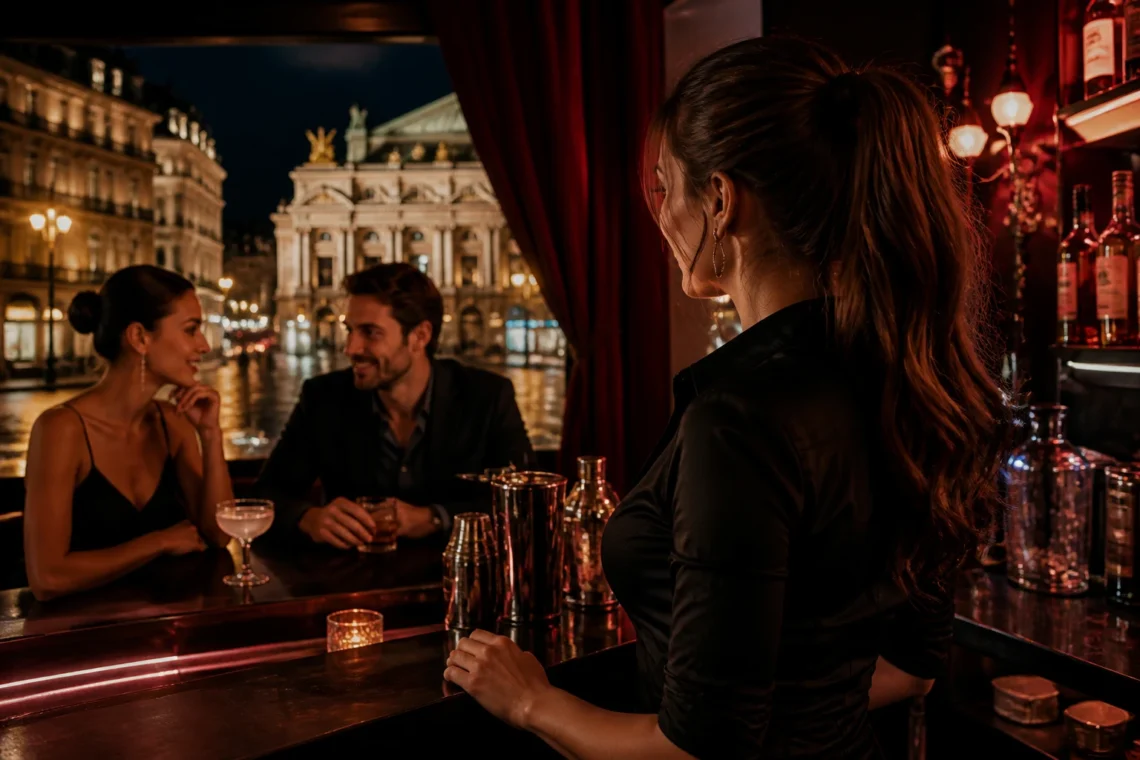
What a Sex Bar Bartender Notices in the First Ten Minutes
The bartender in a Vienna sex bar is not just pouring drinks. He is the first person to form an opinion about you, he forms it fast, and that opinion quietly shapes the next three hours: how you are seated, how quickly company comes over, whether a problem later gets handled gently or formally. None of this is hostile. It is a professional reading of a room full of strangers, repeated every night for years, and it takes about ten minutes.
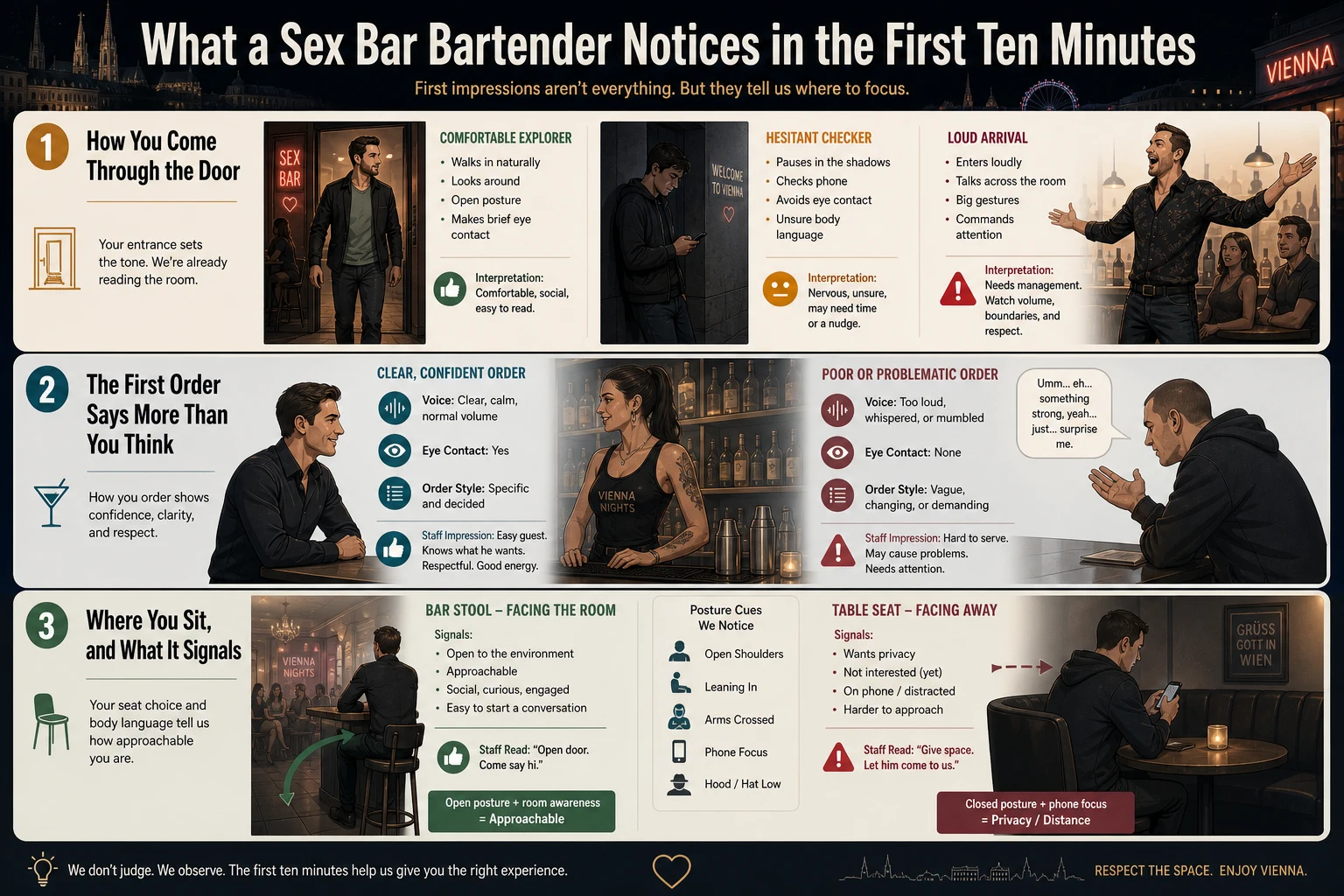
How you come through the door
The first signal arrives before you speak. A guest who walks in at a normal pace, looks around once and finds a seat reads as comfortable. A guest who hovers in the entrance, checks his phone twice and takes a seat in the darkest corner reads as nervous, which is fine, and staff will give him room. A guest who arrives loudly, already talking, reads as a management task for the rest of the evening.
Nervousness is the most common of the three and the least problematic. Nearly everyone is nervous the first time, and the honest account of that experience in what really happens during a first visit matches what staff see: the anxiety fades within half an hour, and it never bothered anybody but the guest.
The first order says more than you think
What you order matters less than how. A clear order, eye contact, a normal voice: that is a guest who has been in bars before. A mumbled order to the counter, or one shouted over the music when the bartender is two metres away, suggests either inexperience or a head start on the drinking elsewhere. Both get noted, neither is judged out loud.
A question at this point is a good sign rather than a bad one. Asking what is included, how the tab works or whether a seat is free tells staff you intend to play it straight, and that is the behaviour every house prefers. The whole argument for being that kind of guest is laid out in sex bar etiquette and what makes a great customer, and it costs nothing to apply.
Where you sit, and what it signals
Bar seats and table seats say different things. At the bar you are available for conversation, with staff and with anybody who sits beside you. At a table you are more private and slightly harder to approach, which suits some visitors perfectly and isolates others by accident. Experienced bartenders read the choice immediately and adjust how often they come by.
Posture works the same way. Facing the room means open; facing the wall with a phone in hand means closed, even if that was not the intention. This is the practical half of everything written about signals in these venues, and the view from behind the counter is captured well in the neighbouring piece on life behind the bar in Vienna’s nightlife.
How you treat the staff is the real test
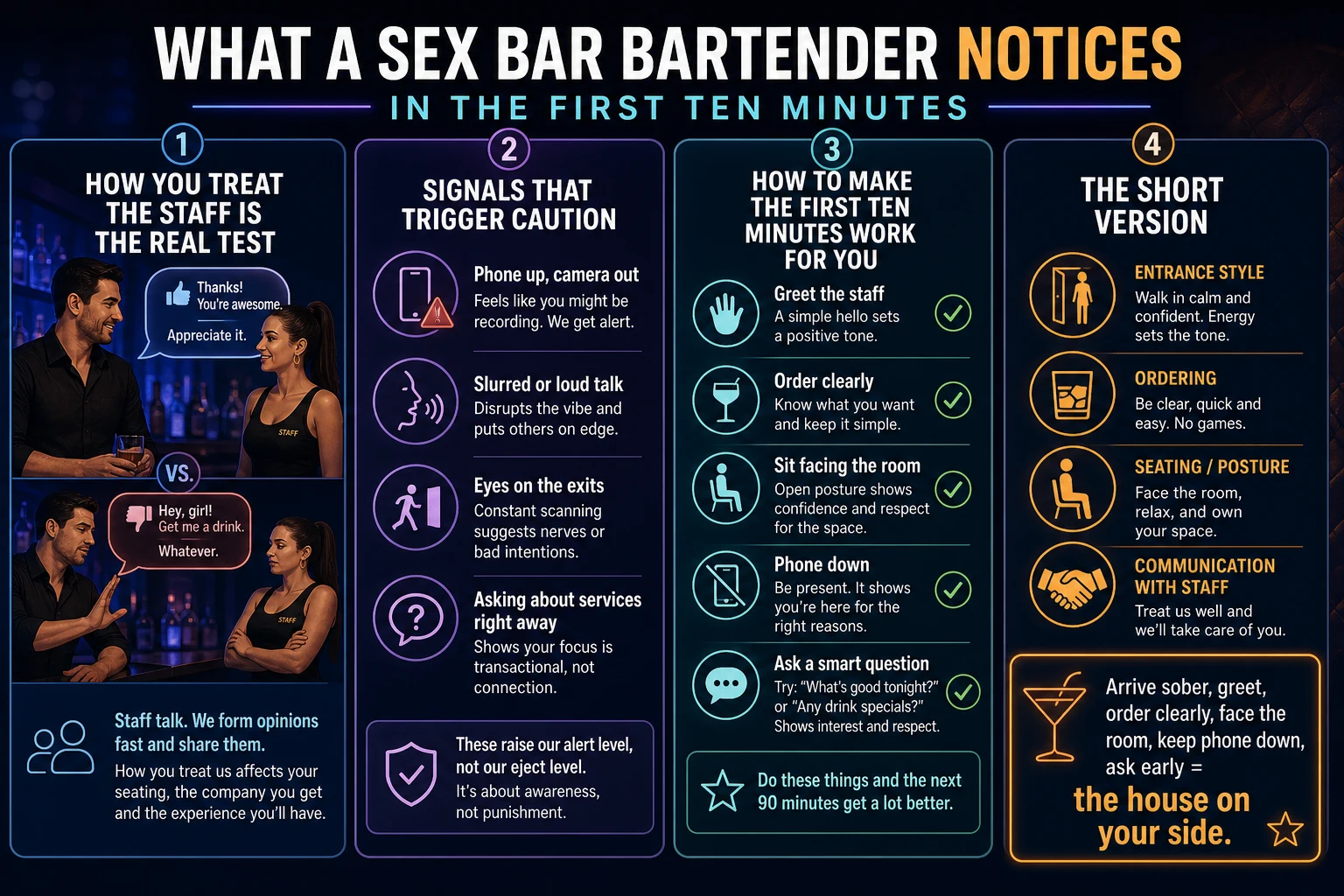
This is the part that decides everything else. Guests who speak politely to the bartender almost always speak politely to the women working, and guests who are dismissive to one are dismissive to the other. Every experienced member of staff knows this correlation holds, and they act on it within the first ten minutes.
It matters because the women decide who they sit with, and they ask the bar. A quiet word from the bartender opens or closes doors faster than anything you say yourself. That informal filtering is part of how these houses maintain a working environment at all, alongside the more formal side described in how sex bars find the women who work there and what is required of them.
The signals that trigger caution
Four things put staff on alert, and they are the same in every house. A phone held up at chest height, because it looks like a camera. Slurred or loud speech on arrival, because it means the evening started elsewhere. Paying attention to the exits rather than the room, which usually just means anxiety but occasionally means something else. And asking about services at the bar before anyone has sat down, which signals a guest who has misunderstood the format.
None of these gets you thrown out. All of them change the temperature slightly, and the temperature is what separates an evening where everything flows from one where everything is merely correct. What a good house feels like when the temperature is right is the subject of what makes a great venue, and staff attitude is most of it.
How to make the first ten minutes work for you
Arrive without a head start, greet whoever greets you, order clearly, sit facing the room, keep the phone away and ask one practical question early. That is the entire method, and it is almost embarrassingly effective. Guests who do this are treated as regulars long before they are regulars.
Doing it repeatedly at the same house compounds, which is the real reward described in what changes when you keep coming back. The staff stop reading you from scratch, and the first ten minutes shrink to about ninety seconds.
The short version
In the first ten minutes a bartender reads four things: how you entered, how you ordered, where and how you sat, and how you spoke to him. From those he forms a working assessment that affects seating, service pace and, indirectly, who comes over to talk to you. Nervousness is normal and costs nothing. Volume, a raised phone and rudeness cost more than any of them are worth.
Arrive sober, greet people, order clearly, face the room, keep the phone down and ask your practical question early. Do that and the house is on your side for the rest of the evening, which is worth considerably more than the price of the next round.


You May Also Like

Free Sex in Vienna: Myths and Realities

A Brief Story About Prostitution in Austria