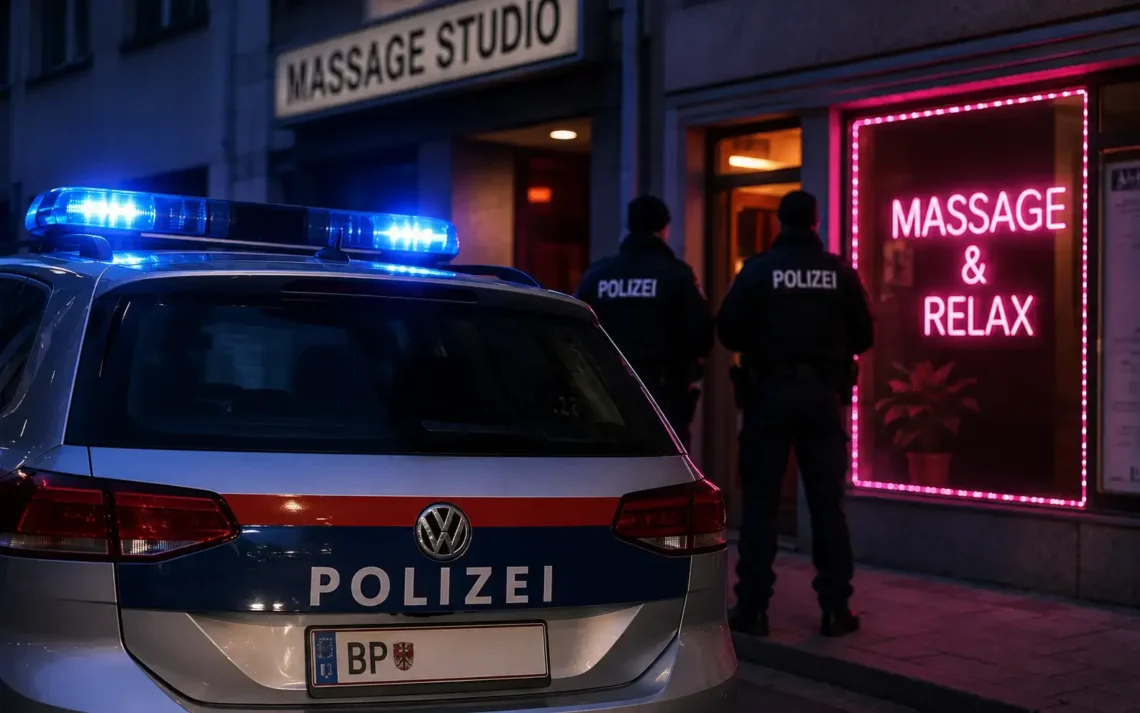
Illegal Apartment Brothels Spread Across Eastern Germany as Authorities Struggle to Keep Up
Investigations into the sex industry in eastern Germany have revealed what appears to be a growing network of illegal apartment brothels. While only a small number of prostitution businesses are officially registered in some areas, dozens of women advertise sexual services online from addresses that are not registered as brothels.
The situation presents authorities with a difficult challenge. Illegal prostitution businesses can operate quietly inside ordinary residential buildings, while proving that women are being exploited, trafficked or forced into prostitution can be much more difficult than proving that an establishment is operating without permission.

Dozens of Sex Work Advertisements Found in Plauen
Research in the city of Plauen identified around 40 online advertisements from women offering sexual services. Many of the women advertising on these platforms reportedly came from Latin America, Asia and Eastern Europe.
Social workers investigating suspected locations encountered women who said they were working voluntarily. However, concerns remained about some of the conditions inside the properties and about whether the women were genuinely operating independently.
The difference between voluntary sex work and exploitation is particularly important. The fact that prostitution takes place illegally does not automatically mean that the sex workers themselves are victims of trafficking or coercion.
Ordinary Apartments Allegedly Used for Prostitution
Similar suspected operations were investigated in parts of Saxony-Anhalt. In the Harz district, authorities officially knew of very few registered prostitution businesses, despite numerous online advertisements offering sexual services in several towns.
At one suspected location in Halberstadt, an undercover investigation found several signs suggesting an organized operation. Multiple apartments appeared to be involved, surveillance cameras were installed, and one woman communicated with the visitor using a translation application before offering sexual services.
Other addresses in the region reportedly showed similar signs. In some cases, investigators suspected that several apartments or even larger parts of a building were being used for prostitution without being registered as prostitution businesses.
Private Sex Work and Brothel Operations Are Not the Same
German prostitution law makes an important distinction between a sex worker using her own private home and someone operating a prostitution business.
A sex worker does not automatically have to register her private residence as a brothel simply because she works independently from home. However, when apartments are provided by third parties or organized for use by multiple sex workers, different legal requirements apply and official authorization may be necessary.
This distinction can make investigations complicated. Authorities must determine not only whether prostitution is taking place but also who controls the property, who organizes the workers and who receives money from the operation.
Authorities Struggle With Limited Resources
Another major problem is enforcement. Regulatory authorities may receive dozens of reports concerning suspected illegal brothels while having only a very small number of employees available to investigate them.
Officials need evidence strong enough to survive legal challenges before they can take effective action. Online advertisements can provide useful clues, but they are not always enough on their own to prove how a particular property is being operated.
Investigators may therefore examine customer traffic, doorbells, covered windows and other indications that an apartment is being used commercially. Even when an illegal prostitution business can be established, proving more serious crimes remains considerably harder.
Forced Prostitution Can Be Extremely Difficult to Prove
One of the biggest challenges is determining whether a woman is working voluntarily or under pressure. Investigators may suspect exploitation but still lack the evidence required for criminal charges involving human trafficking or forced prostitution.
If a woman tells authorities that she entered prostitution voluntarily, prosecutors generally need additional evidence before they can establish that coercion took place. Fear, dependency, language barriers and financial pressure can make these investigations even more complicated.
As a result, there can be a substantial difference between what investigators suspect is happening behind closed doors and what they can ultimately prove in court.
Vietnamese Women at Center of Major Investigation
A separate investigation involving Vietnamese women showed how organized criminal structures can operate behind apartment prostitution.
Investigators uncovered a network in which women were allegedly brought to Germany and placed in apartments used for prostitution. Organizers were suspected of arranging accommodation, transportation and advertising while also collecting money.
Some of the women were allegedly placed under financial pressure through supposed debts connected with their journeys to Europe. Investigators believed this created a system of dependency that made it difficult for the women to leave.
The network was linked to numerous apartments in different locations, demonstrating how easily such operations can be moved between ordinary residential properties.
Illegal Brothels Can Quickly Reappear
Even successful police operations do not necessarily end the problem. Apartment brothels can be relatively easy to relocate, and advertisements can quickly appear again using new addresses.
This makes the system very different from a traditional licensed brothel operating from a clearly identifiable commercial property. An illegal operation may consist of rented apartments, online advertisements, organizers working remotely and sex workers being moved between different cities.
For authorities, shutting down one address may therefore remove only a small part of a much larger network.
Legal and Illegal Sex Work Must Be Distinguished
The investigations also highlight an important distinction between legal sex work and criminal exploitation. Prostitution itself is legal in Germany when the applicable rules are followed, and many sex workers operate voluntarily and independently.
The problem investigated in these cases concerns unregistered businesses, possible immigration offences, financial exploitation and suspected organized crime. Human trafficking and forced prostitution are serious crimes, but their existence should not automatically be assumed simply because sex work is taking place.
The growing use of ordinary apartments and online advertising nevertheless creates a major enforcement challenge. Authorities must identify illegal businesses without treating every sex worker as a trafficking victim, while at the same time recognizing situations in which people may genuinely be working under coercion or severe financial pressure.


You May Also Like

Vienna sex scene overview 2021

Life imprisonment for killing mother and 14-year-old daughter