
Why Brothels in Austria Are Highly Regulated
Austria is known for its progressive and well-structured approach to many social issues, including the regulation of the sex industry. Among the various facets of this industry, brothels in Austria stand out for being highly regulated compared to many other countries.
This robust regulatory framework ensures the protection of workers, public health, and community standards while maintaining legal clarity for operators and clients alike. Understanding the reasons behind these stringent brothel regulations in Austria provides insight into the country’s balanced approach to this complex sector.

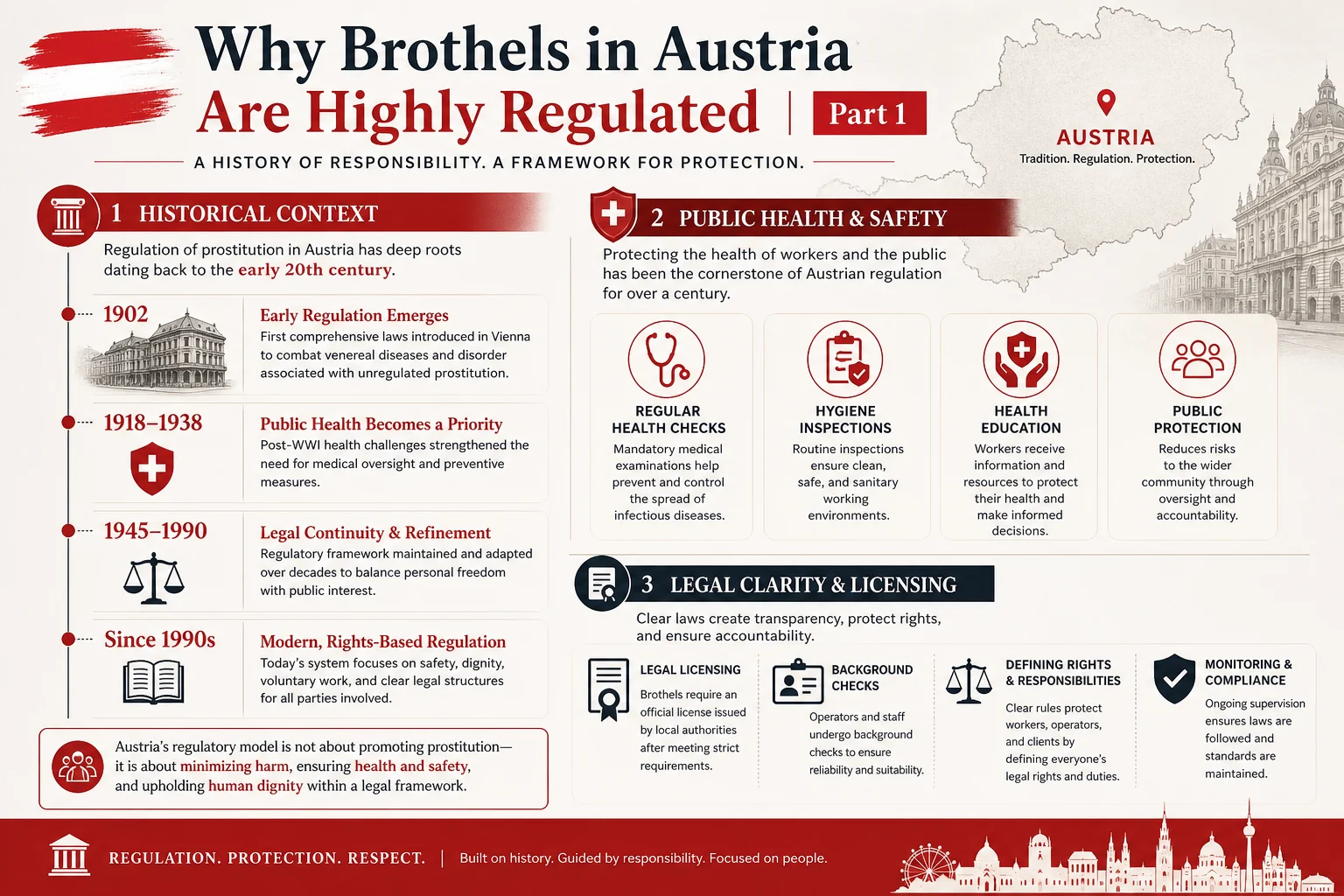
The Historical Context of Brothel Regulations in Austria
The roots of brothel regulations in Austria can be traced back to the early 20th century, when the government began to recognize the importance of controlling the sex trade to curb the spread of sexually transmitted infections (STIs) and improve public order. Over time, these regulations evolved alongside societal attitudes and legal reforms. The Austrian government took a pragmatic stance, acknowledging sex work as a reality that needed oversight rather than outright prohibition.
This historical perspective laid the foundation for modern legislation that balances public health concerns, workers’ rights, and law enforcement. The legacy of these early regulations is evident in Austria’s current system, which is often cited as a model for other countries looking to regulate the sex industry effectively.
Public Health and Safety as Primary Concerns
One of the main reasons brothels in Austria are highly regulated is the emphasis on public health and safety. The government mandates regular health checks for sex workers to prevent and control the spread of STIs. These health protocols are a cornerstone of brothel regulations Austria-wide, ensuring that both workers and clients remain safe.
Additionally, brothel operators must comply with strict hygiene standards regarding the premises. Inspections by health authorities are routine, and failure to meet these standards can result in fines or closure. By enforcing such measures, Austria aims to maintain a safe and healthy environment within the sex industry, reducing public health risks significantly.
Legal Clarity and Licensing Requirements
Another critical aspect of brothel regulations in Austria is the legal clarity provided through licensing and operational guidelines. Brothels must obtain official licenses to operate legally, and these licenses come with a set of conditions that ensure transparency and accountability.
The licensing process includes background checks on owners, adherence to zoning laws, and compliance with labor regulations. This system deters illegal operations and human trafficking, helping authorities monitor and control the industry more effectively. By requiring brothels to register and operate openly, Austria reduces the influence of organized crime and promotes safer working conditions for sex workers.
Protection of Workers’ Rights
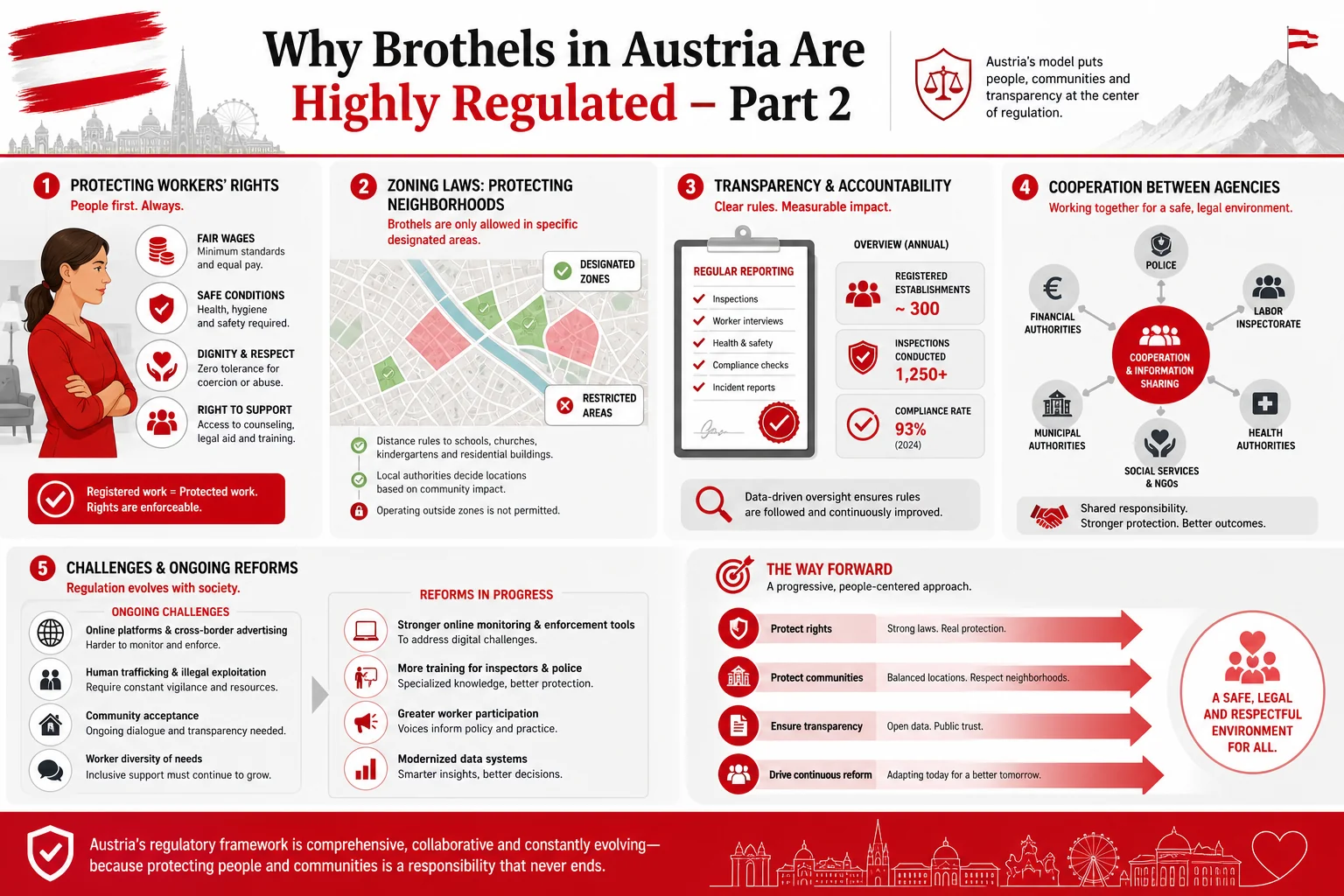
Central to Austria’s brothel regulations is the protection of sex workers’ rights. The country recognizes sex work as legitimate labor, and the legal framework reflects this understanding. Workers in licensed brothels have access to labor protections similar to those in other industries, including the right to fair wages, safe working conditions, and social security benefits.
This approach not only empowers sex workers but also encourages them to seek help if they face abuse or exploitation. The legal recognition helps reduce stigma and provides workers with greater autonomy and security. As a result, Austria’s brothel regulations foster a safer and more respectful environment for those involved in the industry.
Community Impact and Zoning Laws
Brothel regulations in Austria also take into account the impact on local communities. Zoning laws restrict where brothels can operate, often limiting them to designated districts or commercial areas away from schools, residential neighborhoods, and places of worship. This helps minimize conflicts between brothels and the public, maintaining community standards and reducing potential nuisances.
Local authorities are involved in monitoring brothels to ensure compliance with these zoning restrictions, which also facilitates better urban planning. By controlling the location and density of brothels, Austria balances the interests of sex workers, business operators, and residents.
Transparency and Accountability Through Reporting
Transparency is another pillar of Austria’s brothel regulations. Brothel operators must maintain detailed records of their business activities and submit regular reports to regulatory bodies. These reports often include information about employees, health checks, and financial transactions.
This system of accountability makes it easier to identify illegal activities such as underage prostitution or trafficking. Regular audits and inspections by government officials help ensure that brothels adhere not only to health and safety standards but also to ethical business practices.
Addressing Challenges and Ongoing Reforms
Despite the comprehensive nature of brothel regulations Austria employs, challenges remain. Illegal brothels and street-based sex work still exist, often outside the reach of official oversight. The government continues to work on policies aimed at reducing these unregulated sectors by improving enforcement and offering support services for vulnerable individuals.
Ongoing reforms focus on enhancing cooperation between law enforcement, health services, and social organizations to create a more integrated response to the issues surrounding the sex industry. These efforts aim to further improve the effectiveness of brothel regulations while safeguarding the rights and wellbeing of all involved.
Conclusion
Brothel regulations in Austria are among the most comprehensive and structured in the world. Rooted in a history of pragmatic policymaking, these regulations address public health, worker protection, legal clarity, and community impact. By maintaining strict licensing requirements, health standards, and zoning laws, the Austrian government has created a system that protects both sex workers and the general public.
At the same time, the country remains committed to continuous improvement, recognizing that effective regulation requires adaptation to new challenges. This balanced approach ensures that brothels in Austria operate safely, transparently, and ethically, contributing to a healthier and more orderly society.


You May Also Like

Why Drink Menus Differ Between Premium and Basic Bars

Why Some Vienna Sex Bars Are Busier on Rainy Weekdays